Welcome to Why Affiliate Marketing
Why use affiliate marketing?
This site answers the question why use affiliate marketing?
The site includes:
- A comprehensive definition of affiliate marketing.
- Impartial information on the various ways of using affiliate schemes.
- The advantages and disadvantages of the types of affiliate scheme available.
- All of this from the perspective of a merchant or affiliate.
Please make your selection from above to continue.
Affiliate Marketing in Detail
The concept of Affiliate marketing is simple; the affiliate promotes your website, and you reward them. The reward is most commonly commission on the sales they generate, or the click throughs they send. The most popular model by far is to give affiliates some form of commission on the actual sales then generate on your site. This is known as performance based marketing. The ways in which an affiliate promotes your site can vary dramatically. From simply adding a text link or banner on their site pointing to yours. All the way to having specific pages on their site detailing your products or services, and linking directly to them on your site. It's also possible for affiliates to promote your web site offline with posters, flyers, etc, and still track their commission.
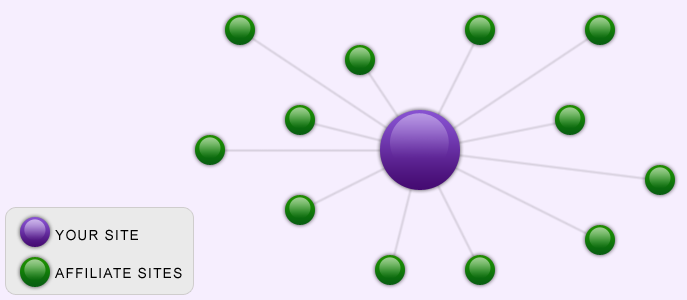
The difficult part is accurately tracking of all of the visitors and sales that the affiliate sends. This is known as affiliate tracking. There are two main options a merchant can choose from to start an affiliate program. The first is by developing or purchasing affiliate software that they can run on their own hosting, or rent from various providers. The second is by joining an affiliate network, where the network acts as an affiliate tracking platform. These options are described in more detail below. Both options work from the same principle of generating unique affiliate tracking ids that are applied to banners or links. Every time an affiliate's link to your website is clicked, the software tracks which affiliate is responsible for sending that visitor. The affiliate tracking is also tied in with your order processing system, so that it knows when a visitor sent by an affiliate makes a purchase.
In order to fully understand affiliate marketing you need to appreciate how it fits into your Internet marketing strategy as a whole.
Internet Marketing Strategy - in brief (for more detailed information visit CosmicMarketing.com)
In August 2004 37% of men and 28% of women who accessed the internet had made an online purchase within the last 12 months. Into 2006 the figure had more than doubled to 86% of men and 84% of women. This continuing trend of online purchasing has lead most businesses to start trading online. Each employing different marketing strategies in an attempt to gain a share of the online market.
Internet marketing strategy is any form of on or offline means to increase visitors to your website. The main strategies are:
Online Marketing
- Affiliate marketing
- Discussed in detail below, where other entities (businesses or individuals) promote your website for a reward. Most commonly, in exchange for commission on the sale of goods or services. A form of performance based marketing where you only pay for measurable results.
- Search engine optimization
- The cheapest (unless you hire someone) but most time consuming strategy. This is where you manipulate your web page with aim to rank higher in the search engine for specific keywords. The higher the rank, the more frequent your website is displayed on the search engine results, the more traffic you get. By creating unique and relevant content, with appropriate META tags and well formed HTML code (W3C valid), you can tell search engine robots how to view and list your page. If you are entering a market with a lot of competition you may still be able to gain a good page rank with a specific keyword phrase. For example, you're setting up a laptop sale and repair shop in Bristol. If you type laptop in a search engine you get about 250 Million results, to get a good rank with this keyword alone could take years and a massive marketing budget. Try running the search again using specific keywords of "bristol laptop" and you should see just under 2 million results are returned, "bristol laptop repair" returns under 65,000. The more specific your keywords the better your chances are of getting a higher page rank for that phrase, and the more relevant the visitors will be. Having W3C valid HTML code ensures that the code you have used is tidy, and more search friendly.
- Email Marketing
- Many companies have built up huge databases of names and email addresses. It's vital that you start collecting email addresses from consenting visitors, so that you can later contact them with promotions and offers. Offering incentives, such as free downloads or special offers can help get people signed up. Although building up your own mailing list will take time, so get started right away. Buying email lists is never a good idea. SPAM is as prolific than ever on the internet, if you email anyone who hasn't specifically requested to receive emails from you, they'll view your email as SPAM. This can seriously damage the reputation of your company, cause your regular emails to genuine customers to be blocked, etc., and even lead to legal action. However, it may be possible to buy advertising space in newsletters that are legitimately sent out to a large subscriber base.
- Directory Submissions
- Search engines add more importance to your website if it has more links to it, as more links equals more interest. By submitting your website to directories you increase the number of inbound links to your website. Although these have less value than they used to, it is still a worth while exercise to help increase your page rank. Some directories charge for the service, others offer a free listing or require a link back.
- Pay per click
- The fasted and most expensive way to get your website promoted. Many search engines offer a service where you pay to be featured in their sponsored links section. You setup the target keywords, content of the advert, and link to your website. You bid against others who have the same keywords to have your advert displayed higher. When a user types a keyword into the search engine, your advert appears if you have bid an amount that is greater than other advertisers, or if your keyword is more relevant. If the user then clicks on your link you get charged. Some sites also display sponsored links on behalf of search engines, although choosing to advertise this way could lead to you featuring on a competitors site. The cost of PPC can vary massively depending on the area you advertise in, and the keywords you target.
- Link building
- The more links you obtain, the higher the interest a search engine places on your website. This can increase your page rank. A two way link where you place a link to another site and they place a link to yours. It is rated less than an inbound only (one way) link without the reciprocal link back. Webmasters are now keen to develop multi way link building with three or more sites, so that the links count for more. For example you have site A you link to site B, site B links to site C, and site C links back to your site A. If you and another party both have multiple sites, you can arrange one way linking to and from different sites. Such as: your A links to their Z, in exchange for their Y linking to your B.
Offline marketing
- Press Release
- You may be able to get press attention to help your Marketing campaign
if your site is of interest to your local community.
- Local newspaper flyers and posters
- Using traditional methods of advertising can also help increase visitors to your site.
Considering the other forms of on and off line marketing, where you often pay a fixed fee regardless of their success. By only paying for results, affiliate marketing can be the most cost effective means of online promotion.
Why Use Affiliate Marketing
Affiliate marketing is a favored web marketing strategy, as it can have a significant impact on increasing the amount of traffic to your site. It can be cost effective, and you can benefit from gaining links from established web sites and online marketers. Top affiliates, or super affiliates as they are sometimes referred, have spent years developing and promoting websites; so they are aware of all the tips and tricks to create an effective online presence.
Do you still need convincing that affiliate marketing is a tool you should use? Just look at the success of others: Back in 1996 Jeff Bezos a book seller set up an online book store. Amazon implemented an in house affiliate scheme, and since then has become one of biggest online stores on the Internet today.
An affiliate scheme helped an auction site grow to what it is today. The eBay in house partnership scheme was set up in the late 1990s and resulted in a massive increase of sign ups.
Many large travel companies rely on affiliate schemes to generate their revenue, and funding for price comparison sites is also derived from affiliate schemes. With many successful online companies using the power of affiliate marketing, it is a tool serious online traders cannot do without.
What are the Affiliate Marketing Models
There are three main types of affiliate models, although different terms are used to describe them, they usually fall into these three categories.
- Pay per Sale, also referred to cost per sale, or commission on sales. You only pay the affiliate if they have generated a purchase on your site. This method carries very low risk, which has made this model the most popular form of affiliate marketing, and is a highly cost effective way of marketing online.
- Pay Per click, also referred to as cost per click. You pay every time your link or banner is clicked on the affiliates site. Usually based on unique clicks but sometimes, raw clicks are used instead.
- Pay per Lead, also referred to as pay per action, or pay per performance. Similar to pay per sale, except it is a step back in the sales process. If you are promoting a product or service that cannot be sold online (such as a company offering bespoke building work, or a mortgage advice service), and need to have some form of face to face, or telephone contact before a sale, then the affiliates can be paid for referring leads.
Affiliate tracking methods
Whether you use an affiliate network or your own in house software, the affiliate tracking methods generally follow the same principles.
- Session tracking
- Is combination of cookie and IP tracking as discussed below. The software logs the session and applies any relevant sale to the affiliate.
- Cookie Tracking
- When a visitor to an affiliates site clicks on your link, a cookie is loaded into their browser. This cookie logs who the affiliate was, so that when the visitor buys from your site the affiliate software picks up the cookie, and logs the sale to that affiliate. The cookie can be set to be valid from a few days to a few months. Meaning that if visitors don't buy straight away, but come back within the cookies validity, the sale is still logged against the affiliate. However, visitors can wipe their cookies at any time. Although, as so many websites use cookies to store user preferences, most visitors wont wipe their cookies regularly.
- IP tracking
- The affiliate software logs the IP address of a visitor who has clicked on an affiliate link. If the visitor makes a purchase on your site, the software compares the IP to that of those recorded. From this it can determine which affiliate has referred the sale. Instead if the information coming from a user's browser, it comes from the software's database, so their is no issue if cookies get wiped. The drawback with this is that visitors may not have a fixed IP address, so if they visit the site at a later date the software will not find a match, which results in the affiliate not be credited with generating the sale.
- Secured Socket Layer (SSL) tracking
- Used by all payment gateways and some shopping carts, SSL encrypts the communication between the visitors browser and your website. SSL is needed for secure cookie tracking. Many online stores need ssl cookie tracking depending on their shopping cart or order processing system set up.
- Customer ID tracking
- This form of tracking generally requires the visitor to register as a user on your website. This can be when they purchase, or sign up for a newsletter, or sign up to receive a free download. From this they are given a unique ID, or on sites that do not use customer IDs, it is common for the customer's email address is be used. This is because most people do not change their email address very often. That ID or email is logged against the affiliate for future lookup. Every time the user logs in and makes a purchase the affiliate is credited with referring the sale. This method is useful for offering your affiliates ongoing or lifetime commissions (below).
- Access code tracking
- This method is where a customer is given an access code to log in to your website. The access code is attributed to an affiliate, so any resultant purchase will be logged as being generated by them.
- Discount coupon
- Specific discount coupon codes are assigned to specific affiliates. Any visitor who uses an affiliates code will have the sale logged as being referred by that affiliate. This method can be harder to implement and depends greatly on your shopping cart or order processing system.
- Replicated web page
- Using this method you create a template website. When an affiliate signs up they are given their own replicated pages which they can often edit to include their own phone number, email, etc. All orders made from the affiliates website can be tracked directly to the affiliate. Such systems are not very common these days for a number of reasons: lots of very similar pages/websites are usually marked as spam by search engines, and can dramatically damage your search rankings; it is difficult to implement anything more than the simplest of replicated sites; it can prove very difficult to keep all the replicated sites up to date.
- Subscription tracking
- If you offer subscriptions, you may want to consider offering recurring commissions. In that case you'd need to associate subscriptions to the affiliate that referred them. By offering a recurring income stream through out the year, more of an incentive is given to affiliates to join your scheme.
- HTTP_REFERER
- Be warned: Some products are claiming you can use the browsers HTTP_REFERER variable for tracking affiliate commissions with a normal link to your site (i.e. one that does not contain the affiliates unique tracking ID). This is a terribly inaccurate and error prone way to track affiliate sales. HTTP_REFERER is blocked by products such as Norton Internet Security, who see this as a privacy issue. There are also a number of ways for it to be faked. For more information see the Wikipedia description of referrer hiding.
Options for starting an Affiliate program
You have two choices for starting an affiliate program, through a network, or in house. For each method you still need to actively manage your affiliate program for it to become a big success. For those merchants with a more substantial budget they can look are hiring a dedicated affiliate manager.
Affiliate program management involves:
- Ensuring affiliates are paid the right commissions and on time.
- Creating banners and text links that affiliates can use to promote your website. Some affiliates prefer text links that describe products and provide some information about your site. Others may prefer a banner with animation and graphics. Some will insist on up to date product feeds that they can download and parse into their site.
- Vetting the affiliate sign ups by checking their site and info to make sure they are appropriate. If you allow instant access to your affiliate program, you never know who might end up linking to you.
- Keeping your affiliates up to date with a regular news letter. For larger affiliates, it's worth contacting them privately by email and phone to negotiate better placement of your adverts on their site.
Through a network
Main selling points through a network
- A Network will claim that they can increase your sales fast, as they already have a pool of affiliates in their database. When a new site joins the network, these affiliates can be contacted and encouraged to start promoting it. This saves time in having to build an affiliate base from scratch.
- Affiliate payments are made on your behalf, so you only need to make a single payment to the network.
- The network supplies the tracking software so you don't have to worry about maintaining it.
- The affiliate network branding can increase the number of affiliates who sign up as they recognize and trust the network.
Behind the propaganda
- The affiliate network branding promotes the affiliate network, not your own site, so if the affiliate signs up to your program and is offered a better site to promote the chances are you would have lost out. This means that any promotions you do outside of the network to promote your affiliate program, will essentially be promoting new affiliates to the network and not just your affiliate program. I've seen a poll that suggested around half of affiliates that sign up to a companies affiliate program and find they are part of a network, end up promoting someone else instead.
- You will have a listing in the network right next to any competitors who are also a part of that network. If your brand name isn't as recognizable then you'll have to offer much better commissions in order to attract the affiliates. You can also quickly end up in a commission battle with other merchants on the network each trying to offer a higher commission. This can have a bad effect taking profits away from your affiliate sales.
- You face high charges, not only do you have to pay a setup fee and monthly fee, you also have to pay an override commission on each sale. This reduces the commission that you are able to offer the affiliates. It also prompts the question: If the network will be taking commission from your sales each month, since the networks are confident your sales will increase, why do you have to pay a monthly fee? The answer is that in case your sales don't increase they want to cover their costs. This doesn't inspire much confidence.
- If your affiliate program is successful, the fees can quickly add up to the equivalent of you having your own dedicated affiliate manager. The network will always have it's own interests at heart, and it's merchants as a whole, not you individually. Running an in house program, with a dedicated affiliate manager, would only have your companies best interests at heart.
- If the scheme is not popular with affiliates, the networks attitude changes from "we have lots of affiliates ready to promote you" to "sometimes it takes time to build up your affiliate base". During this time they are still hitting you with the often high monthly fee.
- When you leave the affiliate network, you may lose all of the affiliate you've enlisted, including those you signed up from outside the network. The network controls the affiliate relationship.
- Many organizations, who have long been running their affiliate programs on networks, are moving to their own affiliate schemes. They see the benefits of doing so out weigh those from being on a network. Famously in 2008 eBay left Commission Junction for their own in house program.
In house
Main selling points
- One off payment for software then optional support contract.
- Full control over how the scheme is run.
- White label products can be fully branded.
- Custom modified/developed product features.
- Direct contact with Affiliates for vetting and incentivising, allowing you to offer top performing affiliates better commission rates.
- Usually no extra charges on commissions leaving more commission to be paid to affiliates.
- You can run the program with your companies best interest in mind, not for the benefit of an affiliate network.
- Direct feedback on your scheme from affiliates.
- Multi tiered/levelled commissions possible.
- Set when and how a pay period run is performed. You have control over an important aspect of you affiliate scheme that can determine the caliber of affiliates you attract.
- Choice of payment options. You chose whether to pay affiliates by PayPal, by bank transfer, or by cheque, on an individual affiliate basis. You can also allow your affiliates to choose how they get paid, giving greater flexibility.
- Co-branding from good quality affiliate software can increase affiliate confidence, helping to sign up more affiliates.
Behind the propaganda
- If you are on a budget hosting package, you may have to upgrade or use the software providers hosting to get the software to work.
- There are some very cheap affiliate software products with some very big claims. These products are more likely to cause your hosting problems and not track properly. It's important to go with a more reputable software provider, you generally get what you pay for. It can be very hard to convince good affiliates to join your program when they can see you are running cheap software. The best affiliates often know a lot about the tracking and have had experiences with the different products available.
- If you do not pay for the software to be setup and configured on your behalf, you may end up spending a lot of time and effort trying to do it yourself.
- You will need to build up your affiliate base yourself, if you currently have little or no visitors this can take time. Although with many software solutions having no monthly or ongoing fees, taking time to build up your affiliate base isn't costly.
- You'll have to install the software and security updates yourself, or pay for the software provider to do it for you. The software provider may offer a support contract.
- If you go beyond 3rd tier commission structures you could put off some affiliates as they may see this as a multi level marketing scam. Recently PayPal have closed accounts of merchants who offered beyond second tier commissions, also some directories will not list your scheme, if they see it as a Multi level marketing program. You must be very careful that your program is not classed as a pyramid scheme, as such schemes are illegal in many countries.
- If you have a mixture of payment options you may find it time consuming to administer.
Affiliate software
Before you make a choice on whether to sign up with a network, or decide on an in house scheme, it is important to consider the different features of affiliate software.
Features
- Brandable
- Some software products allow you to completely change the look and feel of your program. Making it blend in with the rest of your website.
- Operating system
- Software can be platform dependent, such that is only works of Linux or Windows servers. Hosted software solutions do not have this issue.
- Export data
- You'll likely need to export data, such as pay period summaries or more detailed statistics.
- Import data
- If you need to import details from a previous affiliate system, CRM, or if you were able to get the affiliates details out, a network.
- Multi tier
- Is the software capable of 2,3,4,5, etc., tiers>
- Commission structure
- Does the support support the reward structure that best suits you? Pay per Click (PPC), Pay per lead (PPL), Pay per Sale percentage or fixed amount, performance bonuses, scales commissions, commission level changes the more sales achieved, lifetime commissions, individual commission rates, etc.
- Affiliate contact
- Is there a way to email all of your affiliates? Can you tailor the auto responders?
- Affiliate area
- Click and sales statistics, tier affiliate list, tier affiliate contact, CSV downloads, graphs, etc.
- Linking methods
- Are their options for how the affiliate links look? Does the software come with banners made for you, if not, do you have the skills and time to make your own?
- Software support
- Some software comes with free support. Others may offer monthly or annual support contracts. You may be limited to email support or instant messaging and phone support may be available.
- Tracking technology
- As discussed earlier cookie tracking, ip, etc. Be weary of claims using the unreliable HTTP_REFERER variable.
- Install/Configuration/Integration
- Getting any software package to work the way you want can be very difficult. You need to discover who will be installing, configuring and integrating your software. Who will be designing the templates so that the affiliate program blends in with your website. Who will be creating banners. If you are going to be doing some of all of these things, how long will it take you and much is your time worth? You may find it's much less stress, much quicker, and much more cost effective to have the software provider do this for you.
The basic questions to ask are when buying affiliate software
On top of any specific features you require, it is also important to ask the following before making a software purchase.
- What are the hosting requirements?
- Will the package integrate with my shopping cart?
- Do you offer install support?
- Is there a money back guarantee?
- How much is the software (configured and installed)?
- How much for the support contract?
It is important to remember that you get what you pay for. The best affiliates will often know more about the various software packages then you do, as they have encountered them before. If you buy the cheapest package you can find, you'll likely have problems getting the large affiliates to join. Moreover, you need to consider what level of support you are going to get, what language they speak, whether they setup and configure the software, etc. The cheaper packages may leave you pulling your hair out, as you struggle to get them working, and battle with their non English speaking support.
What is Affiliate Marketing
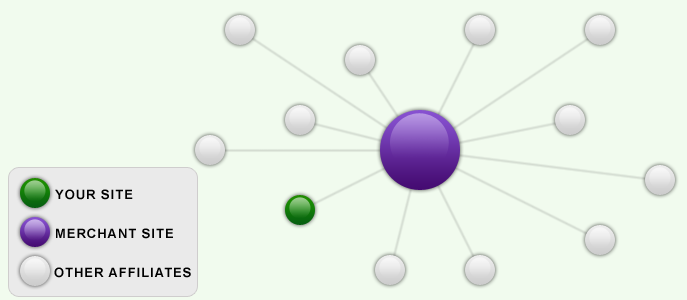
The concept of Affiliate marketing is simple, you promote a merchants website and they give you commission on the sales you generate or the click throughs you send.There are a number of methods that you can use to make money from affiliate marketing both on and offline. Methods include using your own website, Mailing lists you have built up, ebooks, blogs, video blogs, forums, PPC advertising, local media advertising, and custom software.
Affiliate programs provide you with your own log in area and statistics. You can choose which adverts to use (banners, text links, offline flyers), how many visitors you've sent, and how many sales you've generated. It'll tell you who much commission you have made and possible which affiliates you have referred to the program and what cut of their commission you get. The tracking works by generating unique tracking ids that you apply to your links to the merchant site.
Why become an Affiliate Marketer
You can make a supplementary or even a main income from affiliate marketing, depending on how much time and effort you put into a campaign.
What are the Affiliate Marketing Models
There are three main types of affiliate models, although different terms are used to describe them, they usually fall into these two categories.
- Pay Per click also referred to as cost per click. You get paid every time your link or banner is clicked on from the affiliates site. Mainly based on unique clicks but sometimes raw clicks are used to calculate your commission.
- Pay per Sale also referred to as pay per action or pay per performance. You get paid for the results in the form of commission, or a set fee, for a sale or sign up. If you get paid for results, the commission can be much higher than achieving a lower amount per click.
- Pay per Lead also referred to as pay per action or pay per performance. Similar to pay per sale, except it is a step back in the sales process. If a merchant has a product or service that cannot be sold online (such as a company offering bespoke building work, or a mortgage advice service) and needs to have some form of face to face, or telephone contact before a sale, the you are paid for generating the lead.
Affiliate tracking methods
Whether you sign up with an affiliate network or your own in house software the affiliate tracking methods generally follow the same principles.
- Session tracking
- When a visitor clicks on your affiliate link their visit is tracked through session tracking. The session is often tracked using cookies and IP tracking (described below), but sometimes people clear their cookies, or do not have fixed IP addresses. To get round this affiliate software uses a variety of methods to track sales you generate.
- Cookie Tracking
- When a visitor to an affiliate site clicks on your link a cookie is loaded into their browser. This cookie logs your affiliate ID so when they buy from the merchant's site the affiliate software picks this up, and logs the sale to you. The cookie can be set to be valid from a few days to months meaning that if visitors don't buy straight away, but come back in a few days time the sale is still logged against you.
- IP tracking
- The affiliate software logs the IP address of a visitor who has clicked on your link. If the visitor makes a purchase the merchant's site, the software compares the IP to that of those recorded, and from this can determine whether you have generated the sale. Instead of the information coming from a user's browser it comes from the software's database so their is no issue if cookies get wiped. The drawback with this is that visitors may not have a fixed IP address, so if they visit the site at a later date the software will not find a match, which results in you not being credited with generating the sale.
- Customer ID tracking
- This form of tracking Generally requires the user to register on the first visit to the website. This can be for a newsletter or just to receive a free download. From this either their email address is stored and logged against your affiliate ID. Every time the user logs in and makes a purchase you are credited with generating the sale on a reoccurring commission basis (below).
- Access code tracking
- This method is where a customer is given an access code to log in to your website. With different codes some offer different pricing structures for products, or for a download or subscription sites the code could offer a free trial. The access code is attributed to you so any resultant purchase will be logged to your account.
- Discount coupon
- An offer code is issued to a buyer at an exclusive price. Any visitor who uses the code will have the sale logged as being generated by you.
- Replicated web page
- Using this method the merchant creates a template website. When you sign up you are given your own replicated pages which can be edited to include your own phone number, email, etc. All orders made from the your website are tracked. Such systems are not very common these days as it is difficult to implement anything more than the simplest of replicated sites. It can also prove very difficult to keep all the replicated sites up to date.
- Recurring commissions
- To make their affiliate schemes more attractive merchants can offer recurring commissions from repeat customers. If you are promoting lower value products that buyers need several times a year e.g supplements, you could end up with a good monthly income stream.
Picking the right affiliate scheme
Picking the best scheme is down to personal choice and how well you feel you can sell a merchant's product or service. However you should also consider your relationship with the merchant and whether they can be trusted. Remember if a scheme is offering less commission but has a good reputation, and you have a good working relationship with the merchant, you could be better off in the long run if you choose it. Where as another scheme that pays higher commission, but it is irregular, and the merchant is difficult to get on with may end up costing you more. We have described what to look out for when joining an affiliate scheme below:
Options for joining an Affiliate program
You have two choices for joining an affiliate program, through a network, or directly to a scheme managed by a merchant.
Through a network
Main selling points through a network
- The network makes every effort to ensure you get paid as they usually operate an upfront payment system with their merchants.
- You are updated on any new products and any new merchants who sign up to the network so you can make sure you are promoting the site that offers the best commission opportunity.
If you promote several different sites there is just one log in area that covers them all.The affiliate networks can be trusted more than a site that could go out of business after you have spent time and money promoting it.
Behind the propaganda
You can be offered less commission than you get from dealing with the merchant directly. As the networks take their cut of every sale you make, the merchants are left with less profit to pay you from.You may not receive bonuses from individual sites. As the networks control communications from you and the merchants site, you could be their top performing affiliate but only get paid a standard commission. If you dealt with the merchant directly you may get enhanced commission for being their top sales generator.
In house
Main selling points
- You can give direct feedback on the affiliate scheme to merchants.
- You can be offered more incentives or bonuses from the merchant as they are in contact with you and monitor your performance.
- You are likely to get more commission for the same products as a network does not have to be paid.
- You can get more commission for signing up other affiliates and a commission split on their sales with multi level marketing features most affiliate software for merchants has. Networks cannot offer this tiered commission as they cannot track who referred who to which program.
Behind the propaganda
If merchants are start up companies you may find that should business levels be too low you may not get paid.
Affiliate Log in area
It is important to monitor how your website is performing and how much revenue you are generating. Any good affiliate scheme should have a log in area where you can track:
- Site impressions
- the number of times visitors view your site.
- Number of clicks
- the number of times your affiliate link is clicked.
- Number of sales
- the amount of sales that are generated as a result of your referral.
- Amount of commission
- the amount of money you have made for your efforts.
With the above information you will be able to quickly monitor your campaign performance and decide whether it is profitable. Some more advance software can also allow you to generate specific links for each of your marketing campaigns. This is useful if you have two web pages or choose a PPC campaign with your affiliate link. You can the see which specific activity generates the most revenue.
Stealware
One thing to look out for is stealware. This is software that rewrites affiliate tracking codes and overwrites cookies on the users computer. This results in your hard efforts in promoting a merchants going unrewarded and any commissions you generate being paid to someone else. Stealware can infect a users computer in the same way as mailware and other viruses, and can also be loaded on as part of some other software such as a toolbar or application. It is important to monitor your site traffic and pick up an any discrepancies between visitors sent and how much commission you make.
There are several methods of defense against stealware. One method is for the merchant to monitor affiliate performance and ban users who operate are operating stealware tactics. Another is for the affiliate software to only log commission payments if the affiliate ID matches that of their registered website.
Terms
Make sure that you can promote the merchants products or services in the way you want to. Some schemes apply strict criteria on how your site can look and how their products are advertised. This can range from merchants not allowing competitors to be advertised on the same site as them, to placing a limit on the amount you can bid on a keyword term in a PPC campaign.
If the restrictions involve you changing the content of your site, your page rank can be effected, so consider how important it is to sell the product before changing your site.